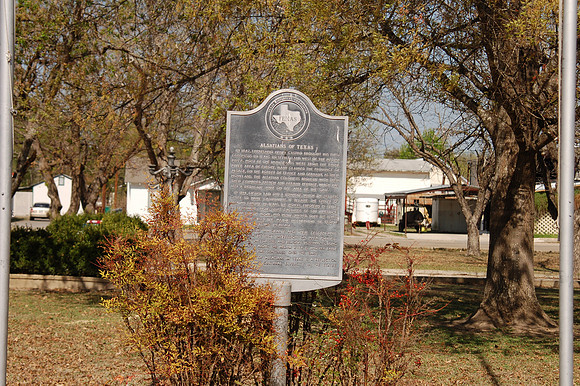
Alsatians of Texas
Castroville
Medina County, Texas
29 21.376' N 98 52.742' W
Text: In 1842, Empresario Henry Castro brought his first colonists to Texas to settle land west of the Medina River. Most of the immigrants were from the Rhine River area of Europe. Many claimed the province of Alsace, on the border of France and Germany, as their homeland. The Alsatian colonists brought with them their combined French and German heritage, which has left a distinctive mark on this area of the state. In 1844, Castro laid out a townsite, which the settlers chose to name Castroville. It became the center of Alsatian culture in Texas. The houses, European in style, are primarily single-story dwellings of cut limestone, mortared with adobe, and white-washed. Over the years, farming has been the major occupation of people in the area, as it was in Alsace. The Alsatian immigrants and their descendants have made a distinct impression on area politics, holiday customs, cuisine, and religion. Winemaking, using grapes grown along the Medina River, is another early tradition that has continued over the years. The history of Alsatians in Texas is a reflection of ethnic and cultural diversity in the state's rich heritage.