Weser
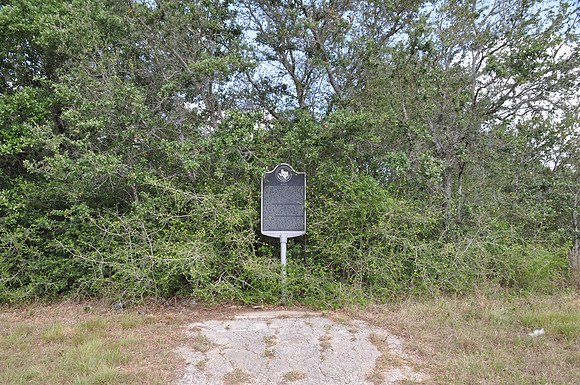
Goliadbr/Goliad County, Texasbr/28 52.063' N 97 22.002' Wbr/Directions: Start at the intersection of SH-183 and FM-1961. Go 300 yards north on SH-183. The marker is on the left (west) side of the road.br/ br/Text: Many German and Polish immigrants came to Texas in the 19th century on a ship named quot;Weser.quot; Arriving at the Port of Galveston, a number of the pioneer settlers made their way overland to this area, establishing a community in the 1850s and 1860s. By 1881, when a post office was granted, it was officially named Weser for the ship that had brought the immigrants to America. By 1900 the settlement included, in addition to the post office, a general merchandise store, a steam grist mill, a cotton gin, a school, a blacksmith shop, a Western Union Telegraph office, a saloon, a Sons of Hermann Lodge hall and a dance hall. A community brass band entertained residents and played for local celebrations. The population of Weser consisted primarily of farmers and ranchers and their families. The school they established for their children served as a focal point and gathering place for area residents. Early facilities were replaced with a new building erected by volunteers in 1903. It continued to serve students in the Weser area until 1943, when it closed its doors. The building was later sold and moved out of the community. The highest population figure recorded for the town was 153 in 1904. It remained steady until the 1920s, when new generations began moving away to larger cities for greater economic opportunities. By the 1930s only two businesses remained in Weser, and the population had dropped to 50, a figure that remained steady for the remainder of the 20th century. Although smaller in number now, the Weser community represents a typical rural settlement in Goliad County.