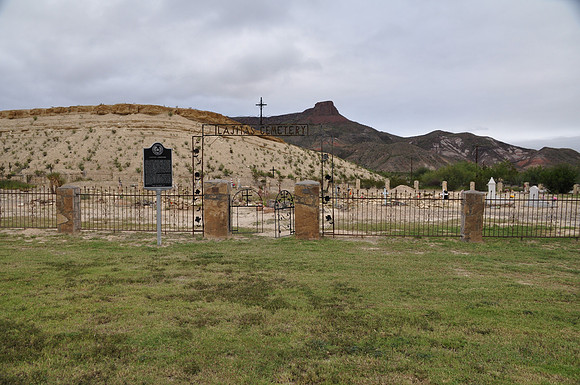
Lajitas Cemetery
Lajitasbr/Brewster County, Texasbr/29 15.740' N 103 46.500' Wbr/Directions: Start at the intersection of Comanche Mesa and SH-170. Go 150 yards west on SH-170. The cemetery is on the right (north) side of the road.br/ br/Historical Marker: Lajitas, the Spanish word for flagstone, comes from the Boquillas geologic formation. Located near Lajitas Crossing/San Carlos Ford on the Rio Grande, the Lajitas cemetery has been in use since at least the early 1900s. For millennia, the ford was used by natives of the region; the Comanche, Apache and other tribes used it during raids into northern New Spain/Mexico. In 1747-1748, two Spanish entradas, led by Pedro de Raacute;bago y Theraacute;n and Don Fermiacute;n de Vidaurre, traversed the crossing looking for a location for a presidio. Following the Comanche Trail, Brevet 2nd Lieutenant Echols stopped here on July 27, 1860, during the second experimental camel expedition. In 1899, Rancher H.W. McGuirk opened a trading post near the crossing to serve the growing Hispanic and Anglo population. By 1900, the Lajitas Crossing was a substation port of entry with uniformed and mounted inspectors. Ultimately, a small settlement emerged with businesses, a school, church and cemetery. From 1911-1917, U.S. troops manned the crossing. For about a century, the Lajitas cemetery has been the resting place for Hispanic and Anglo residents and area workers. The cemetery is enclosed by columns of Boquillas flagstone connected by a wrought-iron fence. The 138 identified graves in the cemetery are primarily form the early to mid-20th century. Vernacular construction predominates in a variety of forms, including barrows (simple rock or sediment mounds) and grutas (elevated monuments with opening or niches for memorials). Used sporadically in recent times, the cemeteryrsquo;s post-1950 burials typically have engraved modern headstones and statues, often with cement slabs over the tombs. The Lajitas cemetery is a reminder of the varied culture and history of this area of Brewster county.