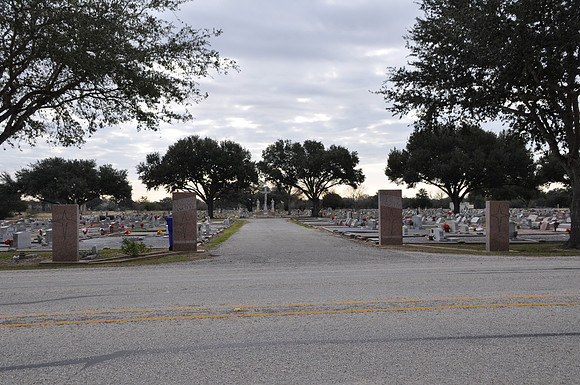
St. Joseph Catholic Cemetery
Yoakumbr/Lavaca County, Texasbr/29 17.163' N 97 07.972' Wbr/Directions: Start at the intersection of Old Church Road and FM-318. The cemetery is on the southeast corner of the intersection.br/ br/Text: Catholics in the Brushy community, which was a rural settlement that developed beginning in the 1830s along the Brushy and Supple Jack Creeks, first organized a church around 1847, building a log sanctuary. However, it wasnrsquo;t until 1869 that, under the direction of Father John Anthony Forest, third Bishop of the San Antonio Diocese, area Catholics began to build the St. Joseph Parish. The structure was completed in 1876 on property donated by John H. and Stephen Dunn. Known by settlers as Brushy Church, St. Joseph served Lavaca and bordering counties until a new church was built in 1912 to accommodate the growing community. The Brushy Church was destroyed by fire in 1932. St. Joseph Catholic Cemetery, however, continued to serve the area. The earliest known burial in this cemetery is of John B. Vollentine, who died in 1871. Many of the individuals interred here were ranchers, farmers or sharecroppers, reflecting the nature of the arearsquo;s rural communities. A noted interment is of Pat May, a founder of Yoakum. Others buried include members of fraternal organizations and veterans of conflicts dating to the Civil War. Religious statuary and iconography illustrate the burial groundrsquo;s connection to catholicism. Other cemetery features include curbing, obelisks and vertical stones. It also contains five mausoleums for above-ground burials. St. Joseph Parish maintains the cemetery, which is still open for descendants of the original parishioners. Today, St. Joseph Catholic Cemetery remains a link to the former rural communities of this area and to the faithful Catholics who lived near Brushy Creek.