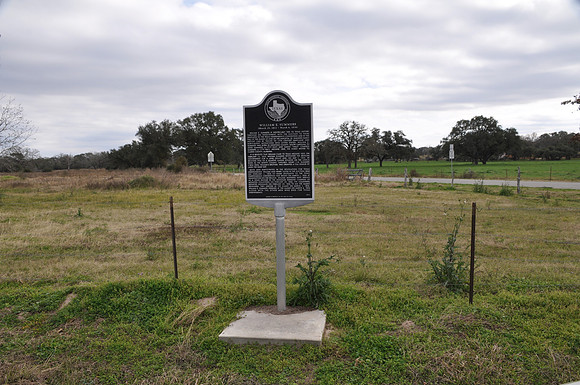
William E. Summers
Ezzellbr/Lavaca County, Texasbr/29 16.810' N 96 53.941' Wbr/Directions: Start at the intersection of CR-12 and FM-531. Go 50 feet west on CR-12. The marker is on the right (south) side of the road.br/ br/Text: (March 29 1811 ndash; March 6, 1836) William E. Summers is inextricably tied to Texas history through his involvement with the election to name delegates to the Texas Independence Convention and in the fall of the Alamo as one of the Immortal 32. Summers family history can be traced to 17th century Maryland and subsequent migration to other states. William E. Summers was born in Edgefield County, South Carolina to Jesse Summers (c. 1777-1837) and Sara ldquo;Sallyrdquo; Coate(s) Summers (c. 1779-1841). Around 1820, the family moved to Clarke County, Alabama. It is believed that William came to Texas around 1832. On February 12, 1835 William Summers petitioned the Mexican government for a land grant and, on May 1, 1835, he received title to a quarter league situated on the Lavaca River in the DeWitt Colony. Similarly, Henry C.G. Summers (1804-1853), Williamrsquo;s brother, was granted a full league of land the same day. Both men participated in the revolution for Texas independence. William and Henry voted in the election held on February 1, 1836 to name delegates to the Texas Independence Convention that began on March 1, 1836 at Washington-on-the-Brazos. William mustered into service as a Texas ranger in the Gonzales Ranging Company of Mounted Volunteers on February 23, 1836. The volunteers departed Gonzales on February 25, 1836 to aid the Alamo defenders. They arrived at the Alamo on March 1, 1836. William E. Summers perished at the Alamo on March 6, 1836 along with the other men who died for Texas independence.