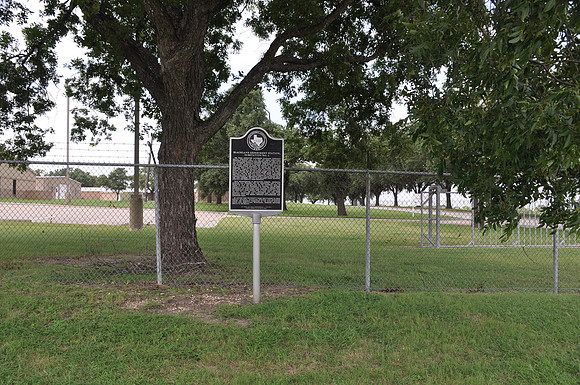
Blackland Experiment Station, Substation No. 5
Templebr/Bell County, Texasbr/31 03.294' N 97 20.874' Wbr/Directions: Start at the intersection of intersection of Blackland Road and Little River Road. Go .45 miles west on Blackland Road. The marker is on the right (north) side of the road.br/ br/Text: The Texas Legislature authorized Blackland Experiment Station, Substation No. 5 in 1909. The Texas Agricultural Experiment Station System was created after the 1887 Hatch Act authorized federally-supported experiment stations as part of state land-grant colleges. After opening in 1911, the station, staffed by Texas Aamp;M scientists, was charged with conducting research on varied soil and crop problems, with a special focus on the control of cotton root rot. Temple's location near the junction of the rolling upland hills of the grand prairie and the fertile, black waxy soil of the blackland prairie made it an ideal location for the research facility. the Temple substation was typical for its time, and consisted of a farm staffed by a superintendent, a researcher with a college degree and a few farm laborers. the site also included living quarters, livestock and essential farm equipment.br/ With advancements in mechanized farming, additional acreage was required for the substation, and it was relocated to a 542-acre site on the southeast edge of Temple in 1927. The enlarged site allowed for broader research on erosion prevention. In 1929, the United States Department of Agriculture (USDA) assigned scientists who in subsequent years jointly, and at times, solely managed the site. in 1973, the USDA's grassland, soil and water research laboratory was established and allowed for increased state and federal research collaboration that continues today. In January 2008 the facility's name was changed to Texas Agrilife Research, Blackland Research and Extension Center. The research conducted at the facility evolves along with agricultural technology, enabling sustained service to the region.