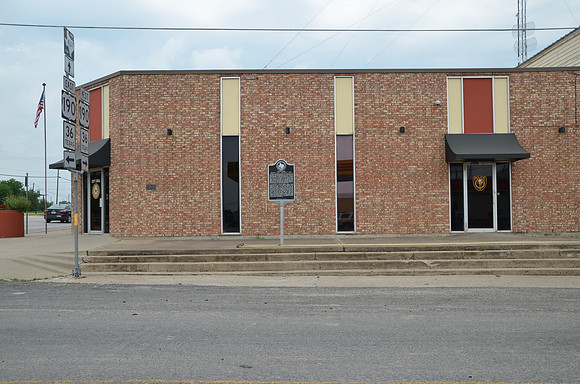
Alvin Ailey
Rogersbr/Bell County, Texasbr/30 55.919' N 97 13.613' Wbr/Directions: Start at the intersection of Alvin Ailey Street and SH-90. The marker is on the northeast corner of the intersection.br/ br/Text: (January 5, 1931 ndash; December 1, 1989) Revered as a pioneer in modern dance, Alvin Ailey was an internationally-recognized choreographer credited fro incorporating African American movements into 20th century concert dance. Ailey was born in Rogers, a rural community in eastern Bell County to Lula Elizabeth Cliff (1912-1944) and Alvin Ailey, Sr. (1911-1974). While still an infant, Alvinrsquo;s parents separated. Growing up in Rogers and other small towns in Texas, Ailey was influenced by church services, music and movement in the Black Community. Searching for employment, Lula and Alvin moved to Los Angeles in 1942. There were many opportunities for Alvin to expand and foster his creative gifts. In high school, Alvin met modern dance teacher, Lester Horton. At Lester Horton Studios, Alvin developed his craft and gained confidence. After Lester died suddenly in 1953, Alvin took over the company and moved it to New York City. He danced and acted in several Broadway plays and musicals and two motion pictures. In 1958, Ailey created Blues Suite, which became his first masterpiece. He followed with the equally moving ballet, Revelations, in 1960. Both works drew upon his childhood and represented African American traditions, struggles, values and joys. Throughout his career, Ailey earned many awards and garnered significant firsts. Aileyrsquo;s dance company, educational centers and scholarships helped sustain Black concert dance in the twentieth century while his ballets facilitated an appreciation for Black culture in music and literature.