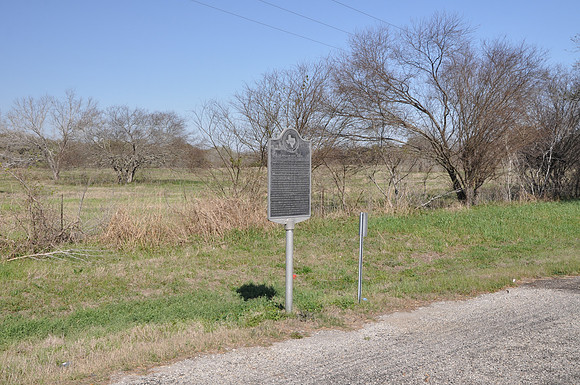
Dr. William Watt White
Concrete
DeWitt County, Texas
29 13.071' N 97 17.797' W
Text: (1829 - 1914) Surgeon of Waul's Legion, Confederate Army. Came to Texas about 1850. In 1856 got M.D. degree in Philadelphia. During Civil War, saved many lives, but took typhoid, which contributed to loss of his eyesight. After blindness, practiced rest of his life. Was local educational and civic leader, this county. Confederate doctors had many problems with drug supply, surgical tools, horse-drawn ambulances and hospitals. Instruments had to be bought in Europe (shipped through naval blockade) or captured from the foe. Drugs came in by blockade - runner or were brought from North by ladies who hid them on their person: in pompadours, bustles, petticoats. Scarcities led to use of dogwood, willow and poplar bark tea as substitute for quinine. Mullein and other wild herbs were also medical substitutes. Garden poppies were milked for opium. Sutures were made of horsehair softened by boiling, or by raveling silk cloth. Female nurses were used for first time in army hospitals. This was first war to use anesthetics. Amputations left severed limbs stacked like wood around the field hospitals. Ambulances seemed never at hand for casualties; many died awaiting aid. Till the atom bomb, the Civil War was history's bloodiest.