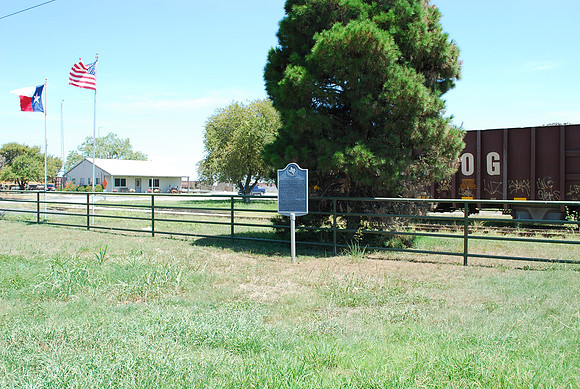
Knippa Trap Rock Plant
Knippa
Uvalde County, Texas
29 17.486' N 99 39.071' W
Text: Volcanic lava deposited here more than 60 million years ago cooled and hardened over time to form basalt, a dark igneous rock also known as trap rock. M. B. (Pete) Walcott purchased acreage here about 1904 and in 1907 formed the Genevieve Mining Co. to search for gold. Although little gold was found, substantial quantities of high quality trap rock were discovered. The Texas Trap Rock Company established a quarry about 1911 and shipments of rock began in 1912. A large highly-visible screening house was completed in 1914. By 1919 Knippa's trap rock plant, the largest in Texas at that time, was capable of producing about 100,000 tons of trap rock per year. The company transported the trap rock by spur line to the Southern Pacific Railroad in nearby Knippa. The company and its employees became an integral part of the community. Knippa High School named its football team the "Rockcrushers" in 1946. The trap rock operation, purchased by White's Mine Company in 1968, was acquired by Vulcan Materials Company in 1987. Trap rock has been applied to various uses such as railroad ballast, decorative stone, and as insulation material. Its historic and primary use, however, has been as a road paving material.