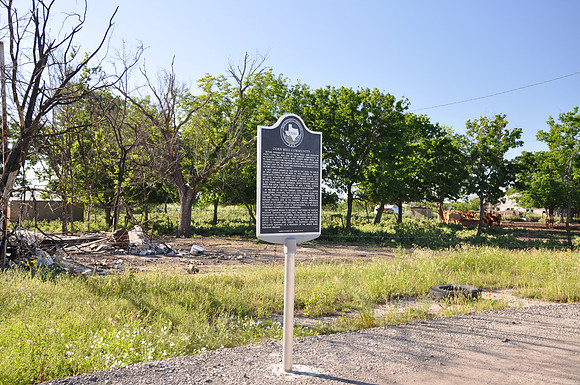
Corn Hill Community
Jarrellbr/Williamson County, Texasbr/30 48.323' N 97 36.890' W br/br/Text: Settled primarily by settlers from Texas and southern states, Corn Hill was one of the earliest communities in Williamson County. John E. King, county judge from 1858 to 1860, named it for the home he built on a hill and nearby cornfield in 1852. The dispersed agricultural community was the first stop on the stage line running from Georgetown to Fort Gates (Coryell County). A post office opened in 1855 and by the 1860s, an influx of new residents settled here. In 1878, George G. Grant established corn Hill Academy Male and Female School, built on land donated by Judge King. It thrived and in 1886 moved to a new two-story building with four classrooms, a bell tower and an auditorium, which provided meeting space for local church services. By 1893, a public school opened as part of Corn Hill Independent School District. By the end of the 19th century, Corn Hill had a saddle club, several churches, two local cotton gins, Corn Hill College, fraternal lodges and school organizations. By the early 1900s, community residents became active in Populist politics and in the Farmers’ Union. Industrial activity of the early 1900s included the Corn Hill and Gravis Telephone Company and a waterworks; a planned interurban to Bartlett never materialized. The settlement began to decline in 1909 when the Bartlett Western Railway bypassed two miles to the north, establishing the town of Jarrell. Steam engines helped move homes and businesses to the new townsite, and other moved to the village of New Corn Hill, but many residents chose to remain here. Today, the dispersed Corn Hill settlement survives as a reminder of the area’s early agrarian heritage.